
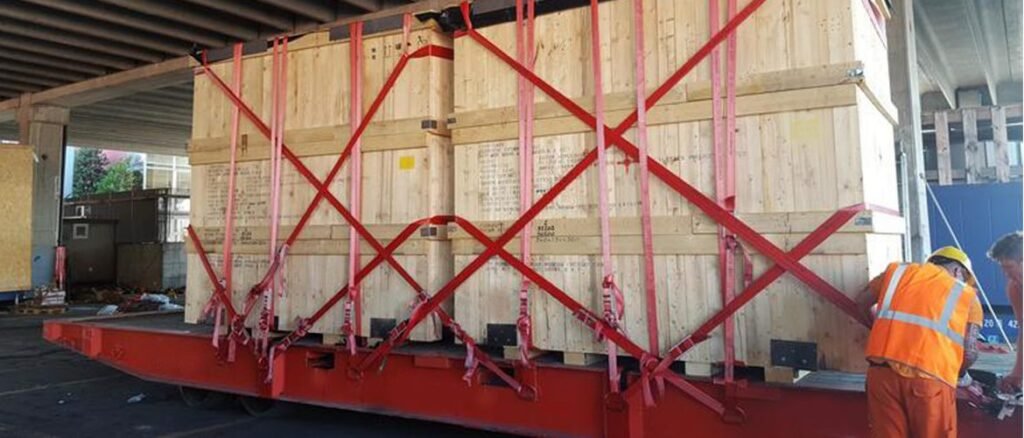
There are six degrees of motion that a sailing ship experiences: surge, sway, heave, roll, pitch, and yaw. The ship also bends and twists with incoming waves. The movement of hatch covers is relative to the hatch openings. The container stacks also move with clearances in the lashing equipment. The only way to resist these movements and attempts and maintain the containers on board is a good lashing system.
The strength of a good lashing system is highlighted during bad weather. Any container loss due to a bad lashing system can cause concern. Not only does such loss increase cargo claims but the floating containers can also prove to be hazardous. It is, therefore, important to have a secure system in place. The ship must be strong enough to lift containers and the lashing systems must be in good order.
The following guidelines can help and prove beneficial in understanding how losses can be minimized.
Containership cargo securing devices contain fixed fittings such as stacking cones, foundations, deck foundations, lashing plates, lashing eyes, lashing pots, and d-rings. These are integrated into the hull structure or fitted on double bottom or hatch covers. Loose fittings comprise twistlocks, stackers, bridge fittings, tension/pressure elements, spanners, lashing rods and turnbuckles. Containers of different heights are secured using open turnbuckles combined with multi knob rods — one rod length. The turnbuckle is also equipped with a slide nut to aid rapid adjustment and safe connection. It is important to inspect and maintain cargo securing devices regularly. This includes a routine examination of components being utilized, lubrication of securing devices, repair of damaged securing devices, and removing unusable securing devices. One must also keep some additional portable securing devices on board.
Following all the above-mentioned guidelines will not only ensure safe shipping and lashing but also, avoid any resultant losses.